25 Jun 2026 · 6 min read
You're not lazy. You're standing at the Wall of Awful.
ADHD task paralysis is real, and it is not laziness. Here is why the ADHD brain freezes between wanting to do a thing and being able to start it, the different shapes that paralysis takes, and the strategies that actually help you move.
- adhd
- executive function
- task paralysis
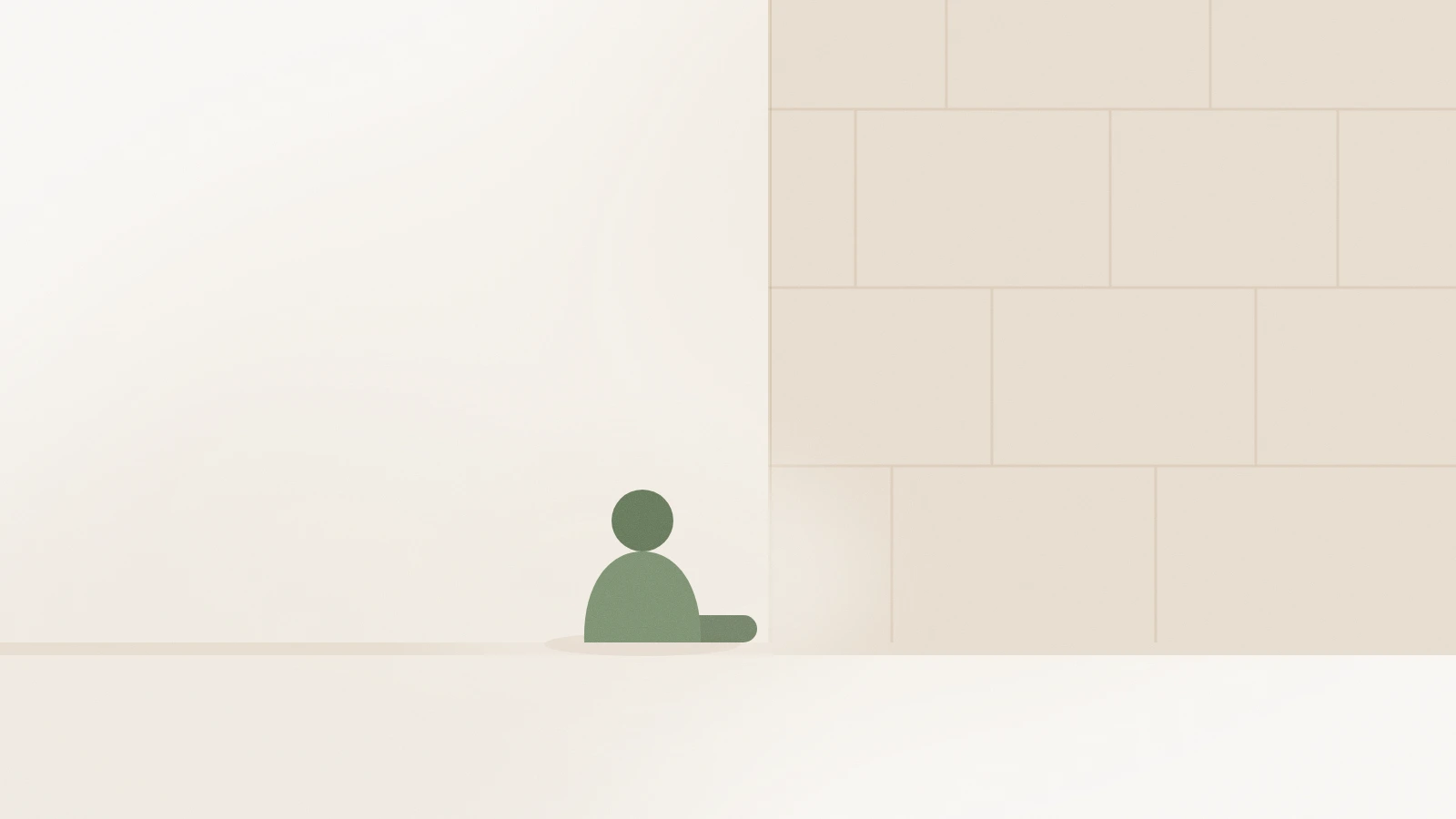
Here is the thing nobody tells you early enough: wanting to do something and being able to start it run on two completely separate systems in your brain. When they come apart, when you want to and you really want to and you still cannot move, that is not laziness. It has a name. People with ADHD call it ADHD paralysis, or task paralysis, and it is very real. Once you can see its shape, it stops having quite so much power over you.
The wall
ADHD coach Brendan Mahan calls it the Wall of Awful, and it is still the best description anyone has come up with. Every time a task goes badly, or you get criticised for it, or you let yourself down, a brick gets added to an invisible wall in front of that task. Reply to the email you have been dreading? There is a wall there now, built out of every previous email that went sideways.
So when you finally sit down to do the thing, you are not facing a five-minute task. You are facing the wall. And motivation, the advice everyone gives you, “just push through,” cannot climb a wall made of shame.
That is why “just break it into small steps” so often backfires. A wall does not get smaller when you add more steps. It gets taller, because now there are five things to fail at instead of one.
The different shapes it takes
ADHD paralysis is not one thing. It shows up in a few distinct ways, and naming the one you are stuck in helps more than you would expect.
Task paralysis is the classic: a specific job sits on your list for days, weeks, sometimes years, and you cannot make yourself begin. You can hyperfocus for hours on something fun, then freeze before a two-minute task you actually want done.
Choice paralysis, sometimes called decision paralysis, is when there are too many options and your brain simply will not pick. You stand in front of the open fridge, or the full inbox, or the long to-do list, and the sheer number of paths shuts the whole system down. More choices feel like more pressure, not more freedom.
Mental paralysis is the foggy one. Your thoughts pile up faster than you can sort them, everything feels equally urgent, and you end up doing nothing because you cannot find the thread to pull. It is overwhelm wearing the mask of blankness.
All three share the same engine. You want to act, and you cannot, and then you call yourself lazy for it. You are not.
If you are wondering whether this is ADHD, here is an honest guide to the adult ADHD and autism screening tests.
Why it actually happens
ADHD paralysis is not a willpower problem. It is rooted in executive dysfunction, the part of the brain that handles getting started, prioritising, and switching between tasks. When executive function is running low, the gap between intention and action widens, and you fall straight into it.
A big part of the mechanism is the ADHD brain and dopamine. The brain reaches for what feels stimulating or urgent right now, and a boring or scary task offers neither, so it gets quietly skipped no matter how important it is. Add a hit of overwhelm, the fear of doing it wrong, or a noisy, bright, over-stimulating room, and the nervous system tips from “I will start soon” into full freeze. The root cause is not that you do not care. It is that your brain is being asked to push a task uphill without the chemistry it needs to start the climb.
This is worth saying plainly, because the community says it to each other constantly: ADHD paralysis is real, it is a recognised symptom of how the ADHD brain works, and it is not a moral failing.
Why it matters more than the task
If you grew up neurodivergent and undiagnosed, you did not just collect bricks. You collected a story. ADDitude has cited research suggesting a child with ADHD can receive in the region of 20,000 more corrective or negative messages by the age of ten than their peers. Twenty thousand. “Why didn’t you just,” “you’re so capable when you try,” “stop being lazy.”
After enough of those, the gap between what you could obviously do and what you actually got done stops looking like a symptom. It starts looking like evidence, proof that something is wrong with you, not with the situation. That is the real injury. Not the unwashed dishes. The quiet, decades-long belief that you are fundamentally flawed.
You are not. The “lazy” label was the wrong tool handed to the wrong problem, over and over, by people who did not have a better word.
Strategies that actually help
We will be straight with you, because that is the whole point of this place: none of this is a cure. These are ways to get over the wall, not knock it down forever. Some days it will be lower. Some days it will be enormous. Both are normal. Here is what tends to work.
Name the wall out loud. “I am not avoiding this because I do not care. There is a wall here.” That single reframe, moving the problem from your character to a thing in front of you, is the move Mahan’s whole approach rests on. It sounds too simple. It is not.
Shrink the first step until it is almost embarrassing. Not “do my taxes.” Not even “open the folder.” More like “find the folder.” The job of the first step is not to make progress. It is to break the freeze. If a free tool helps, Goblin Tools breaks a task into pebbles for you, and you can keep tapping until the first pebble is small enough to actually pick up.
Cut the number of choices. If choice paralysis is the problem, the fix is fewer options, not better ones. Pick the first acceptable thing rather than the perfect thing. Lay out tomorrow’s three tasks tonight so morning-you does not have to decide. Decision-making is a limited resource, and ADHD spends it fast.
Borrow someone else’s momentum. This is why body doubling works, having another person quietly present while you work, even over video, even a stranger. It is not about being watched. A body in the room makes the wall a little more climbable, and it answers the isolation that paralysis feeds on. Free options exist before you pay for anything.
Lower the stakes on purpose. A lot of the wall is fear of failure, the dread of doing it imperfectly. So give yourself permission to do it badly. A rough draft, a “good enough” version, a fifteen-minute attempt you are allowed to abandon. Avoidance shrinks the moment the task stops being a test.
Turn down the sensory volume. Overwhelm and overload are triggers, not background noise. If the room is loud, bright, or cluttered, your executive function is already spending energy just coping with it. Earplugs, a tidier corner, or warm low light can free up enough bandwidth to begin.
Let the feeling move through first. Some of the wall is pure emotion, and you usually cannot think your way past that. A short walk, a few minutes of something physical, and the wall is often noticeably lower on the other side.
If you take one thing from this
The next time you are frozen in front of something you genuinely want to do, try swapping the question. Not “why am I so lazy,” which has never once helped you and is built on a lie you were handed young.
Try: “What is the wall made of, and what is the smallest possible first brick to step over?”
That is not a productivity hack. It is a different relationship with your own brain, one where you are not the problem to be fixed but the person finding a way through. That is the whole reason NuroQuirk exists. You were never on the outside of “capable.” You were just handed the wrong map.